
Why Do Businesses Need 24/7 Online Chat Service to Stay Competitive?
A few months ago, I tried to book a service appointment late at night after a long day. I was finally sitting still, phone in hand, ready to schedule and pay. The website looked great, the offer was clear, and I was ready to commit. Then I hit one small question about availability and timing. The only option was an email form with a promise to reply “within 24 to 48 hours.” I closed the tab and booked with a competitor in under five minutes.
That is the reality of modern buying behavior. Customers do not shop on your schedule. They shop on theirs. If your business goes quiet after hours, you leave money on the table and invite competitors to step in. A 24/7 Online Chat Service is not about being “always on” for the sake of it. It is about meeting customers when intent is highest, questions are time-sensitive, and patience is limited.
How Customer Expectations Changed And Why Speed Now Signals Quality
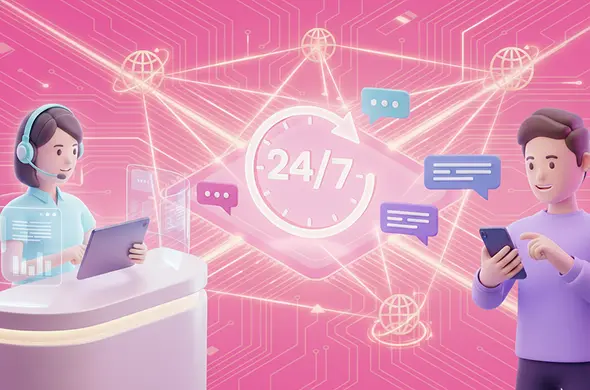
Digital habits have rewired expectations. People get instant notifications from banks, real-time tracking from delivery apps, and near-immediate answers from online platforms. When they contact a business and hear nothing back, it feels outdated, even if the business is excellent.
Speed also influences trust. A fast response suggests the business is organized and attentive. A slow response makes customers wonder what else might be slow: shipping, support, refunds, repairs, or problem resolution. In competitive markets, that perception is enough to shift the decision.
Why 24/7 Online Chat Service Creates A Competitive Advantage
A 24/7 Online Chat Service keeps your business available when customers are actively deciding. That matters because purchasing intent does not follow business hours. Late evenings, early mornings, weekends, and holidays can be high-intent moments, especially for consumers who work full-time and shop during off-hours.
It also reduces friction for people in different time zones. If you sell nationally or globally, “after hours” is relative. 24/7 coverage helps you capture conversations when they happen, not after the customer has already moved on. That changes the conversion rate story in a way that feels immediate.
Where 24/7 Chat Makes The Biggest Difference
Not every question requires a live conversation, but certain moments are time-sensitive and high-stakes. These are the points where a customer is ready to buy, cancel, or escalate.
24/7 chat support is most impactful for:
- Checkout problems and payment errors
- Shipping timelines and delivery questions
- Appointment scheduling and service availability
- Account access and login issues
- High-consideration purchases where one question blocks a decision
These are not “nice to have” moments. They are decision points. Being present at the decision point changes the outcome.
How Always-Available Chat Supports Revenue, Not Just Support
Many businesses treat chat as a customer service channel, but it also functions as a sales channel. People often message with questions that are really buying signals. They want confirmation and reassurance, not a sales pitch.
If a customer asks about pricing tiers, shipping speed, or whether a service is available in their area, they are close to purchasing. When chat is available 24/7, those questions can be answered while intent is still warm. That keeps the customer moving forward instead of delaying and losing momentum.
The Role Of Website Chat Assistance In Reducing Buyer Hesitation
Website chat assistance helps remove the small doubts that stop customers at the finish line. Many buyers do not abandon because they dislike the offer. They abandon because they cannot confirm one detail quickly enough.
Chat can clarify return policies, explain service steps, confirm inventory, and help customers choose the right option. It acts like a helpful employee in a store who steps in at the exact moment you are staring at a shelf wondering which one to pick.
Why After-Hours Questions Are Often The Most Valuable
After-hours chats are not always random. They often come from customers who finally have time to make a decision. That could be a parent shopping after kids are asleep, a professional browsing after work, or a business owner planning next week at midnight.
These customers are often focused and ready to act. When no one is available, they either postpone or purchase elsewhere. A 24/7 model captures the moment instead of hoping the customer comes back later.
How A Strong IM Chat Service Keeps 24/7 Support Organized
An IM chat service provides structure that makes around-the-clock chat practical. It can route conversations, tag topics, store history, and help teams pick up conversations without forcing customers to repeat themselves.
That continuity matters more than most businesses realize. Customers do not just want speed. They want a smooth experience. When the system keeps context, a new agent can step in and help without starting from scratch, even if the conversation spans different shifts.
Blending Automation And Humans Without Frustrating Customers
Most 24/7 chat programs use a mix of automation and human support. Automation is useful for simple routing, collecting basic information, and answering common questions. Human agents are best for nuance, reassurance, and problem-solving.
A balanced approach usually looks like this:
- Automation handles simple FAQs and gathers details upfront
- Humans handle billing issues, complex troubleshooting, and sensitive topics
- Clear escalation rules prevent customers from getting stuck in loops
- Handoffs preserve context so the customer does not repeat the story
When that balance is done well, customers feel supported rather than filtered.
What 24/7 Chat Reveals About Your Business
Chat conversations are a goldmine of customer insight. They show what people are confused about, what they hesitate on, and what they need to feel confident. Over time, this data can improve your website, product pages, policies, and onboarding.
Common insights revealed through chat include:
- Pages where customers get stuck
- Product details that are missing or unclear
- Policies that are misunderstood
- Shipping or service expectations that need clearer wording
- Recurring technical issues during checkout
Fixing these problems reduces support volume and increases conversions at the same time.
Setting Standards So 24/7 Chat Feels Consistent
Inconsistent chat quality is one of the fastest ways to lose trust. Customers should not get completely different answers depending on the hour. A 24/7 program needs shared standards and a clear playbook.
A practical playbook often includes:
- Response time expectations by priority
- Approved policy language for refunds, returns, and service terms
- Tone guidelines that keep replies professional and human
- Escalation rules for legal, safety, or security-related requests
- A simple closing method that confirms next steps
Standards keep speed and quality aligned, which is the goal.
Managing Costs Without Sacrificing Service
Some businesses assume 24/7 support requires a large team. That is not always true. The real strategy is matching coverage to demand and using smart routing.
Cost-friendly approaches include:
- Coverage during peak after-hours windows instead of full overnight staffing
- Tiered support, where complex issues are handled during business hours
- Automation that collects details and sets expectations when agents are unavailable
- Outsourced after-hours coverage aligned to your policies and tone
The goal is to keep customers moving forward, even if some issues require follow-up later.
Industry Examples Where 24/7 Chat Is Hard To Compete Without
In certain industries, customers often expect immediate answers because timing and trust matter. If competitors offer 24/7 chat, the absence becomes noticeable.
Industries where 24/7 chat often pays off include:
- E-commerce and subscription brands
- Home services with emergency requests
- Healthcare scheduling and intake support
- Travel and hospitality
- SaaS onboarding and technical support
These categories share a common pattern: customers make decisions quickly and expect fast clarity.
Common Mistakes That Make 24/7 Chat Feel Worse
24/7 chat only helps if it feels responsive and helpful. Poorly executed chat can frustrate customers and harm the brand.
Common mistakes include:
- Promising instant support but responding slowly
- Using scripts that ignore the customer’s actual question
- Keeping customers trapped in automation loops
- No clear next step after the conversation
- Handing off without preserving context
Fixing these issues often improves outcomes more than adding more staffing.
Conclusion
A 24/7 Online Chat Service helps businesses stay competitive because customers shop, compare, and ask questions at all hours. When your business is available in those moments, you reduce friction, protect trust, and capture demand while it is still active.
If you want to stay competitive, start by mapping the moments customers most often get stuck and ask questions. Then build a chat experience that meets them there, even outside standard business hours. Availability is not just a support feature. It is part of how modern customers choose who to buy from.
FAQs
Why Do Businesses Use 24/7 Online Chat Service Instead Of Email Support?
A 24/7 Online Chat Service helps businesses respond while the customer is still on the website and ready to act. Email often introduces long delays, and those delays can cause customers to lose momentum or choose a competitor. Chat also creates a smoother experience because it can answer questions immediately, clarify policies, and help customers complete checkout without leaving the page.
Does 24/7 Online Chat Service Really Increase Sales?
A 24/7 Online Chat Service can increase sales because many chat questions are buying signals. Customers often reach out when they are close to purchasing but need confirmation about shipping, pricing, availability, or service fit. When those questions are answered quickly, customers are more likely to complete the purchase instead of waiting, getting distracted, or shopping elsewhere.
How Can A Small Business Offer 24/7 Online Chat Service Without A Huge Team?
Small businesses can offer a 24/7 Online Chat Service through a mix of scheduled coverage, smart routing, and automation. Many start by covering high-intent evening hours and weekends, then expand based on volume. Automation can collect details and answer basic questions, while humans handle complex requests. Clear expectations help customers stay patient if follow-up is needed.
What Should A 24/7 Online Chat Service Be Ready To Handle After Hours?
A 24/7 Online Chat Service should be ready for time-sensitive questions that block decisions. That includes checkout issues, shipping timelines, appointment availability, account access, and product fit questions. After-hours support also benefits customers who want quick reassurance about returns or service terms before they commit. The goal is to remove hesitation and keep the customer moving forward.
How Do You Keep 24/7 Online Chat Service From Feeling Automated Or Impersonal?
A 24/7 Online Chat Service feels human when it responds to the customer’s specific situation. Even if automation is used for routing, the tone should be natural, and handoffs should preserve context. Agents should reflect the customer’s question in their response, provide clear next steps, and avoid generic scripts. Consistency in tone and policy guidance helps the experience feel trustworthy.
About Us
Recent
Our Services
IM Chat Service
Live Chat Service
